
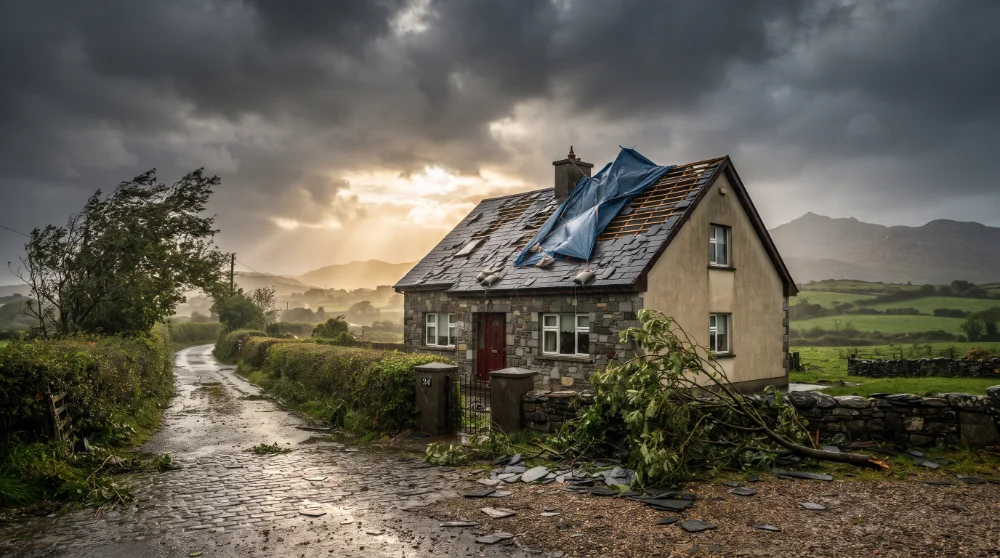
When a storm hits Ireland, the immediate priority for any homeowner is to stop water entering the building. A leaking roof after a storm is one of the most stressful situations a property owner can face, and the temptation to act quickly can lead to costly mistakes. This guide sets out a clear, practical sequence of actions—what to do first, what to avoid, and how to secure a reliable contractor without falling victim to opportunistic fraud.
The First Hour: Safety Before Salvage
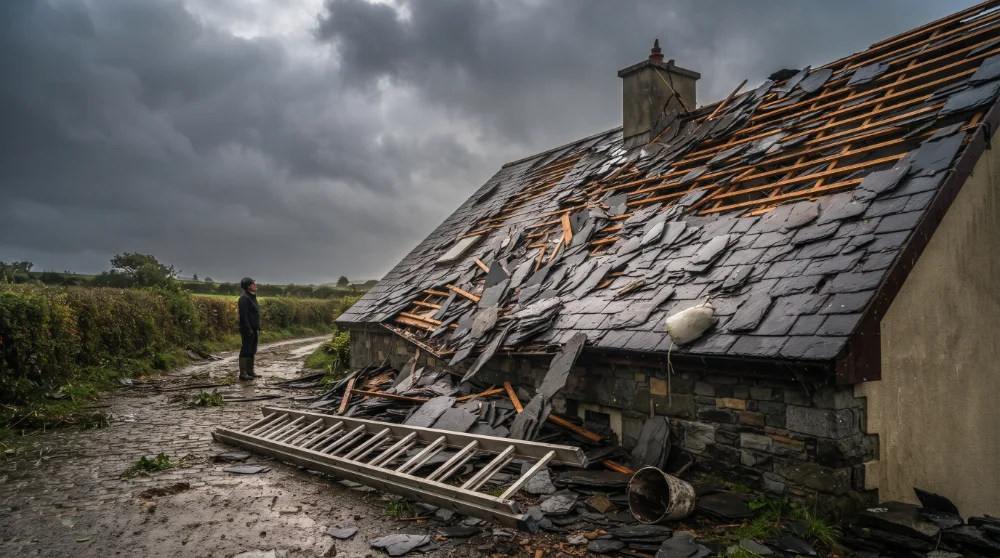
The instinct to climb onto the roof and investigate the damage is strong, but it is also the most dangerous course of action. Every year, homeowners are seriously injured—or worse—by attempting to access a storm-damaged roof themselves. A wet, wind-damaged roof surface is treacherous, and unseen structural damage can give way without warning.
The first priority is to protect people, not property.
- Stay off the roof. Do not attempt to climb a ladder onto a damaged roof. If a section of the roof covering is loose or missing, do not reach over the gutter to retrieve it.
- Check the ceiling and attic cautiously. IfIf you see water dripping into your attic or ceiling, put buckets under the drips and move furniture away. Do not touch any electrical fixtures that may have been exposed to water.
- Turn off electricity to affected areas if there is any risk of water contacting light fittings or sockets. Use a torch, not a smartphone, if the power is off.
- Keep children and pets away from the affected rooms until the damage has been assessed.
The Irish weather forecast frequently includes storm force winds and heavy rainfall. If a Met Éireann warning is in force, stay indoors and wait until conditions ease before making any external inspection.
Documenting damage for insurance purposes
And the next step, once it is safe to do so, is to make a thorough record of the damage. This documentation will be required by your home insurer and it will back up any claim.
- If possible, take pictures and videos of the damage from the ground level with a zoom lens.Take note of as many details as you can – missing tiles or slates, damaged fascia boards, water stains on ceilings and any items that have been damaged by water ingress.
- Take photos of the inside showing water damage to the walls, floors and furnishings.
- Nothe date and time of the damage and the weather conditions at the time.
- Keep receipts for any emergency items purchased (tarpaulins, buckets, dehumidifiers).
Most Irish home insurance policies cover storm damage to the roof and resulting water damage to the interior, but the burden of proof is on the policyholder. A clear photographic record significantly strengthens the claim. Check your policy for the excess amount and whether accidental damage is included.
Temporary Measures: What You Can Do Yourself
Once the storm has passed and it is safe to proceed, limited temporary measures can be taken at ground level. These are not repairs—they are mitigation.
- Clear blocked gutters and downpipes if they are accessible from a ladder at a safe height. Blockages can cause water to back up under the roof covering.
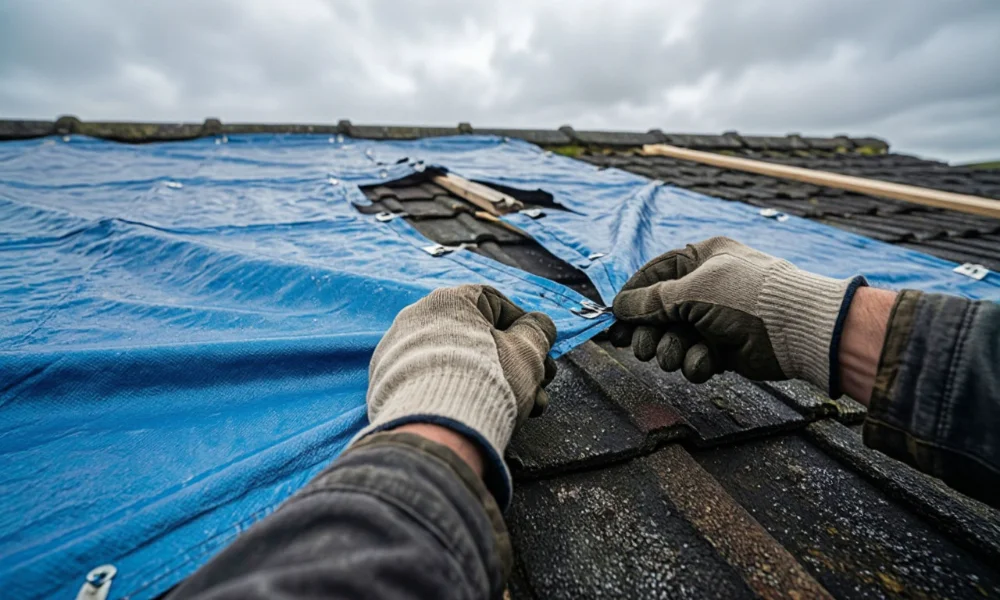
- Place a tarpaulin over any large missing sections only if you can do so safely from a ladder without standing on the roof. Secure it with ropes or straps, not nails and make sure it does not become a wind trap.
- Open windows and use dehumidifiers, if available, to ventilate wet areas.This prevents secondary damage from condensation and damp.
If the damage is extensive or not accessible, do not attempt to make temporary repairs. Wait for a professional.
How to Vet an Emergency Roofer: Red Flags
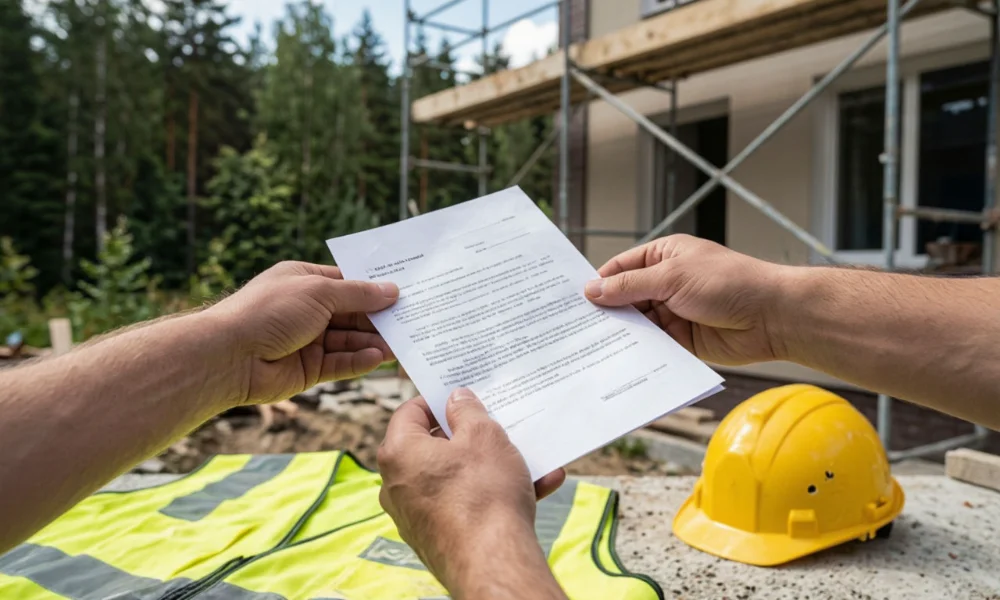
After a storm, unregistered and opportunistic traders often show up offering immediate repairs at inflated prices. These practices have been the subject of repeated warnings by the Competition and Consumer Protection Commission (CCPC). There are a few basic checks to choosing the right contractor in an emergency.
- See if they have a verifiable physical address and not just a mobile number.A legitimate contractor will have a business address and a landline or office phone number.
- Ask to see proof of insurance – public liability insurance and employers’ liability insurance (if they employ others).A legit contractor will be happy to provide you this.
- Ask for a written quote for any work that is suggested.A written estimate protects both parties even in an emergency.
- Don’t pay full price up front.A deposit is standard, but demanding full payment before work begins is a red flag.
- Watch out for door-to-door salesmen and pressure to sign right away.Storm chasers often take advantage of vulnerable homeowners in the days after a severe weather event.
The Roofing and Cladding Association of Ireland and local chambers of commerce may be able to give you a list of registered contractors in your area.
The Emergency Repairs Itself “
A good emergency roofer will come out and look at the damage and stop any more water coming in. Typical emergency actions are:
- Repairing loose or missing roof coverings by using temporary fixings or tarpaulin
- Clearing clogged gullies and valleys.
- Replacing damaged flashings around chimneys and skylights.
- Sealing visible leaks with temporary sealant (as a short-term fix, not a permanent repair).
The cost of an emergency call-out varies by contractor and the extent of the damage. A basic emergency response for a storm-damaged roof in Ireland might range from €200 to €600, depending on access, location, and time (out-of-hours call-outs are more expensive). This should be discussed and agreed before work begins.
It is important to understand that emergency repairs are temporary. A full assessment and permanent repair will be required once weather conditions allow.
Planning the permanent solution
Once the immediate crisis is over, the homeowner should make plans for the permanent fix. This means:
- A professional roofer will inspect the roof to assess the extent of structural damage.
- Dedetailed written quotation for the permanent work itemized by material, labor and any other repairs needed.
- Thtime of the work taking into account weather conditions and availability of materials.
- AWarranty on the finished product. Usually this is one to ten years, depending on the contractor and materials used.
If the damage is covered by insurance, the insurer may ask for several quotes before authorizing the work.You should advise the insurer before you hire a contractor.
How To Deal With An Insurance Claim?
For many homeowners, filing the insurance claim is as stressful as the storm itself.The process is simple with structure.
- Inform your insurer straight away.Most policies have a time limit for reporting claims (often a few days).
- SuPlease submit your photo evidence and a written description of the damage.
- ObWritten assessment from a reputable roofing contractor.
- Keep all correspondence and receipts.
- Beavailable for the assessor to inspect if the insurer requires it.
- Donot begin permanent repairs until the claim has been assessed, unless the damage presents an immediate risk to health and safety.
Each Irish home insurance policy is unique. Some cover storm damage to the roof and interior, but exclude damage caused by poor maintenance. Others include accidental damage as an add-on. Understanding the terms of your policy before a storm hits is the best preparation.
Conclusion
An emergency roof leak after a storm is a difficult and stressful event, but a calm, structured response minimises the risk of further damage and financial loss. The sequence is clear: prioritise safety, document the damage thoroughly, take only safe temporary measures, vet any contractor carefully, and plan the permanent repair with the same diligence you would apply to any major home improvement project. The cheapest quote in an emergency is rarely the best value—and the most reliable contractor is the one who is transparent about costs and processes from the first phone call.